RapidSetupX: Node page.
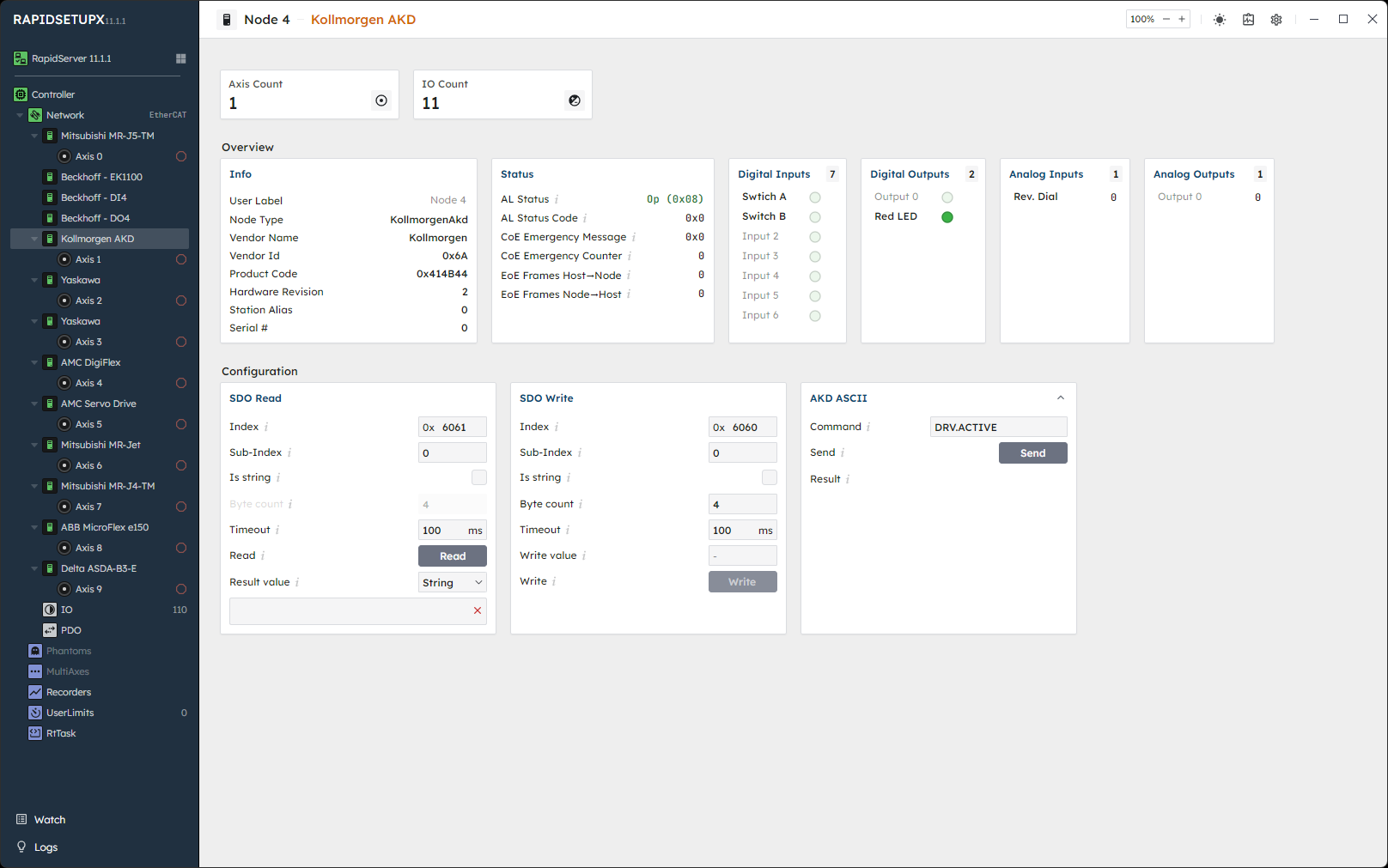
- Analyze device info.
- Read/write SDOs.
- Note
- The Node page is enabled only if the Network is created and operational.
🔹 Sections
Learn about the different sections/cards available in this page.
Main
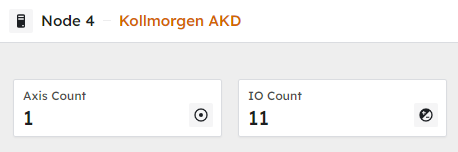
Some important information is shown at the top of the page:
- Label: displays the current user label (or default enumerated label) of the connected node.
- Name: displays the name of connected node.
- Axis Count: displays the number of Axis objects supported by the node.
- IO Count: displays the available IO.
Overview
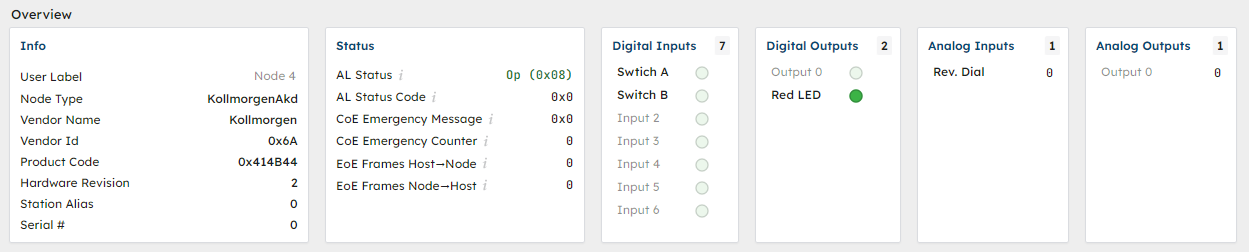
Product information is displayed here.
- User Label: label this node. The resulting label will appear at the top of the page and in the tree-view tooltip. To remove it, right-click the field and choose Clear label. See UserLabelSet.
- Node Type: displays the RSINodeType of the connected node. See TypeGet.
- Vendor Name: displays the vendor name, as displayed in the NodeInfo file. See VendorNameGet.
- Vendor ID: displays the Vendor ID, as discovered. See VendorIdGet.
- Product Code: displays the Product Code, as discovered. See ProductCodeGet.
- Hardware Revision displays the Hardware Revision, as discovered. See RevisionGet.
- Station Alias displays the Station Alias, as discovered. See StationAliasGet.
- Serial #: displays the Serial Number, as discovered. See SerialNumberGet.
- Digital Inputs, Digital Outputs, AnalogInputs, and AnalogOutputs: panels will appear to display IO on node, when available. Labels can be edited and cleared, as on the IO page.
SDO Read and Write
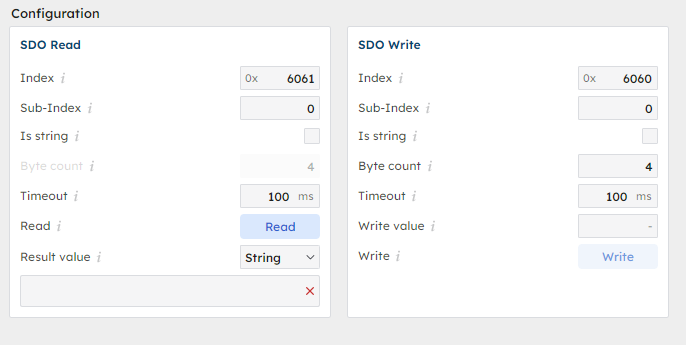
Here, you can read and write SDO values, to/from the connected node. See ServiceChannelRead and ServiceChannelWrite.
- Index: Refers to the location in the object dictionary where a specif ic piece of data or parameter is stored. The "index" is a 16-bit address in th e dictionary, represented in hexadecimal format.
- Sub-Index: Further specifies the particular element within the indexed object.
- Byte count: Determines how many bytes of data you want to read from the specified index and sub-index.
- Timeout: Maximum time the system will wait for the read operation to complete.
- Is string: Set this field to "true" to read the SDO value as a string, "false" to read the SDO value as an integer.
- Read: When clicked, RapidSetup will attempt to retrieve the data from the specified index and sub-index.
- Value: Displays the value of the SDO read.
- Write: Write an SDO value with the previous parameters.
CustomNodeInfo.xml
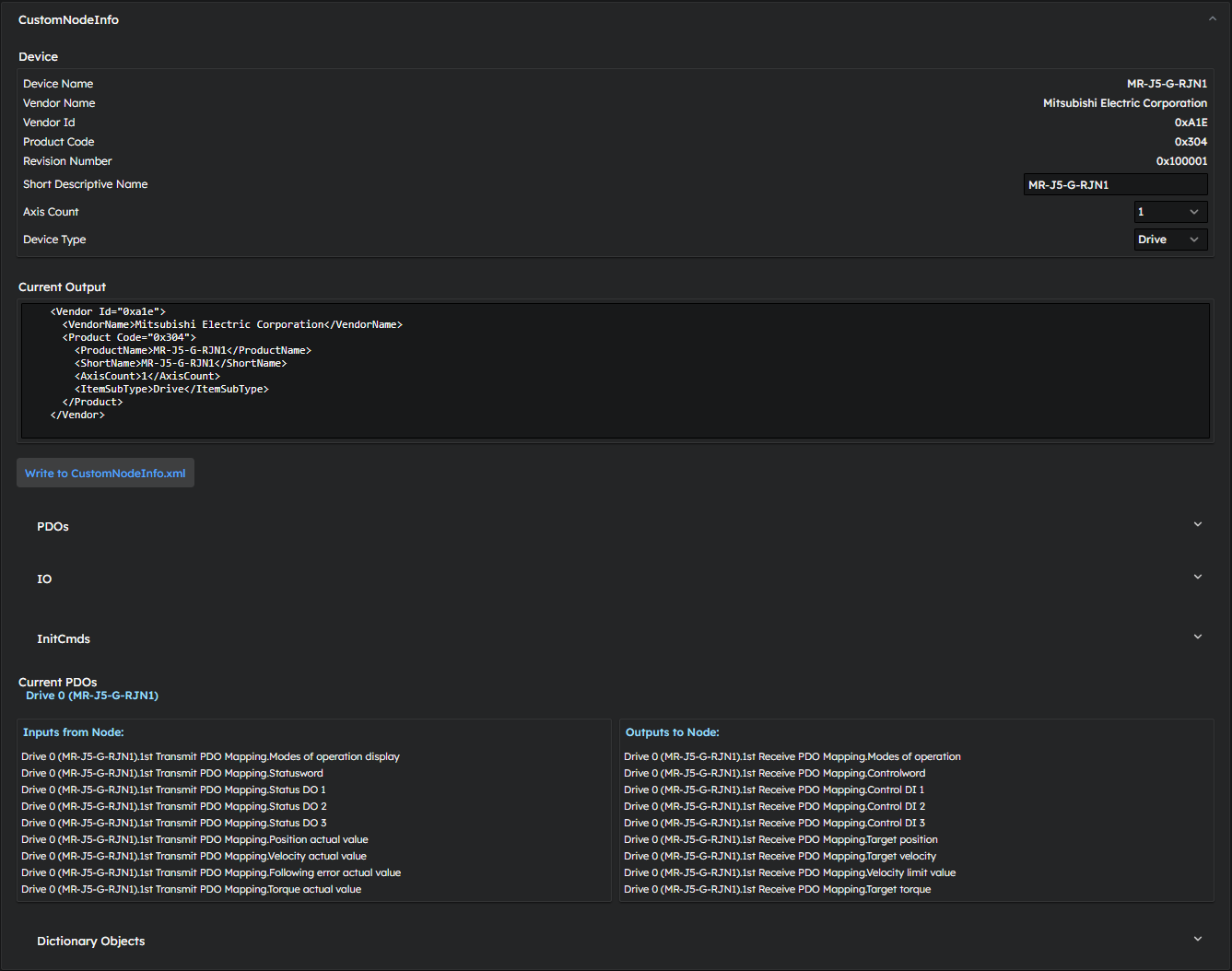
When you have an Unknown node or are in Developer Mode, you can develop a CustomNodeInfo.xml entry for your drive.
See NodeInfo & CustomNodeInfo files.
- Device: Information pulled from the ESI file about the node.

- Short Descriptive Name: Pick any name you want — this is how the device will appear in RapidSetupX.
- Axis Count: Use the default unless you are certain this is a multi-axis node.
- Device Type: Drive for drives. Box for Gateways. Term for Terminals or slice modules.
- Current Output: Preview of the Output.

- Write to CustomNodeInfo.xml: save the contents above to CustomNodeInfo.xml.
- PDOs: Change the PDOs exchanged or content of said PDOs.
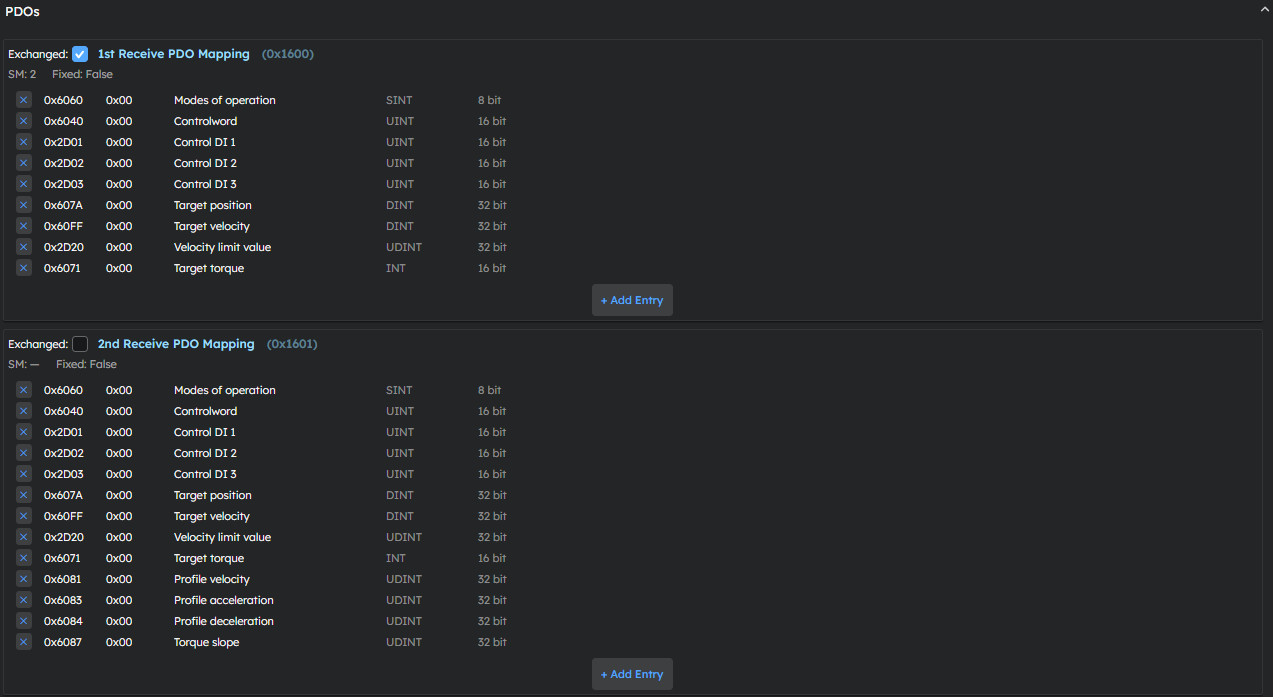
- Exchanged / Not Exchanged: Toggles whether this PDO is included in the cyclic exchange with the node.
- ✕: Removes an entry from the PDO.
- + Add Entry: Opens a dictionary picker to add an object from the ESI as a new PDO entry.
- IO: Identify IO on the node which is not automatically detected.
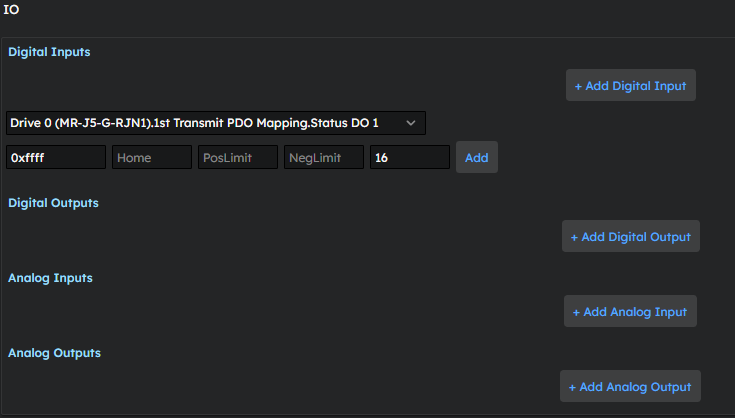
- SigBits: Which bits in the Digital should be considered Digital Inputs.
- Home: Bit number of the Home Input.
- PosLimit: Bit number of the Positive Limit Input.
- NegLimit: Bit number of the Negative Limit Input.
- InitCmds: Add any InitCmds you need for node configuration on startup.

- Transition: When to send the InitCmd.
- Data: What to send in the InitCmd.
- Current PDOs: Shows what the exchanged PDO information will contain when the network is active.

- Dictionary Objects: Pure reference of information scanned from the ESI file.


 1.15.0